ASEAN holds Regional Consultation Workshop on Strengthening the Non-Punishment Principle in Trafficking in Persons Cases of Forced Criminality
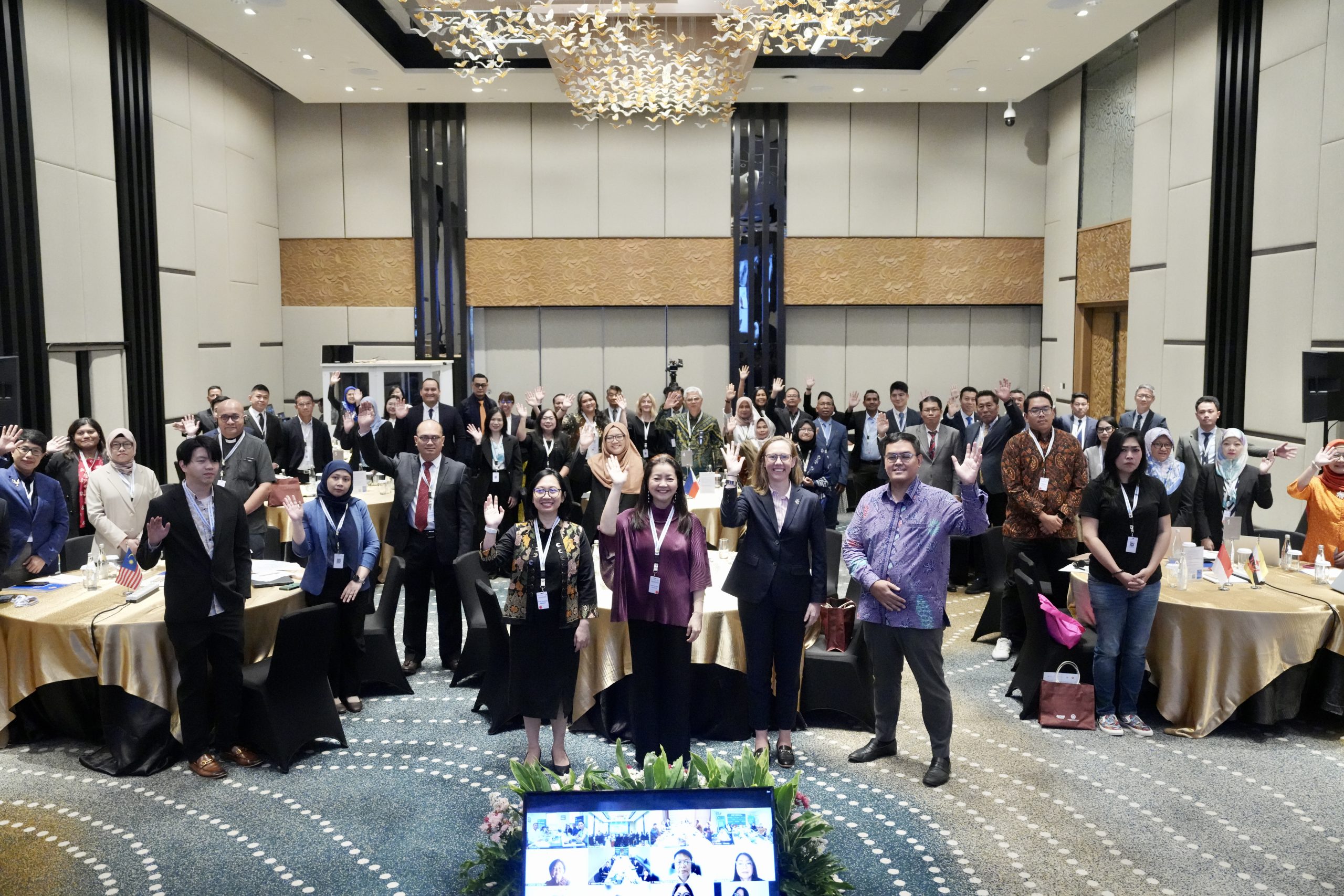
JAKARTA, 31 October 2025 -The ASEAN Intergovernmental Commission on Human Rights (AICHR), together with the ASEAN Senior Officials Meeting on Transnational Crime (SOMTC), convened the Regional Consultation Workshop on Strengthening the Non-Punishment Principle in Trafficking in Persons Cases of Forced Criminality on 30–31 October in Jakarta, Indonesia.
Supported by the Australian Government funded ASEAN-Australia Counter Trafficking program, the workshop provided a platform to discuss key elements for developing ASEAN-specific training materials, indicators, and monitoring tools to improve the identification, investigation, and protection of trafficking victims involved in forced criminality.
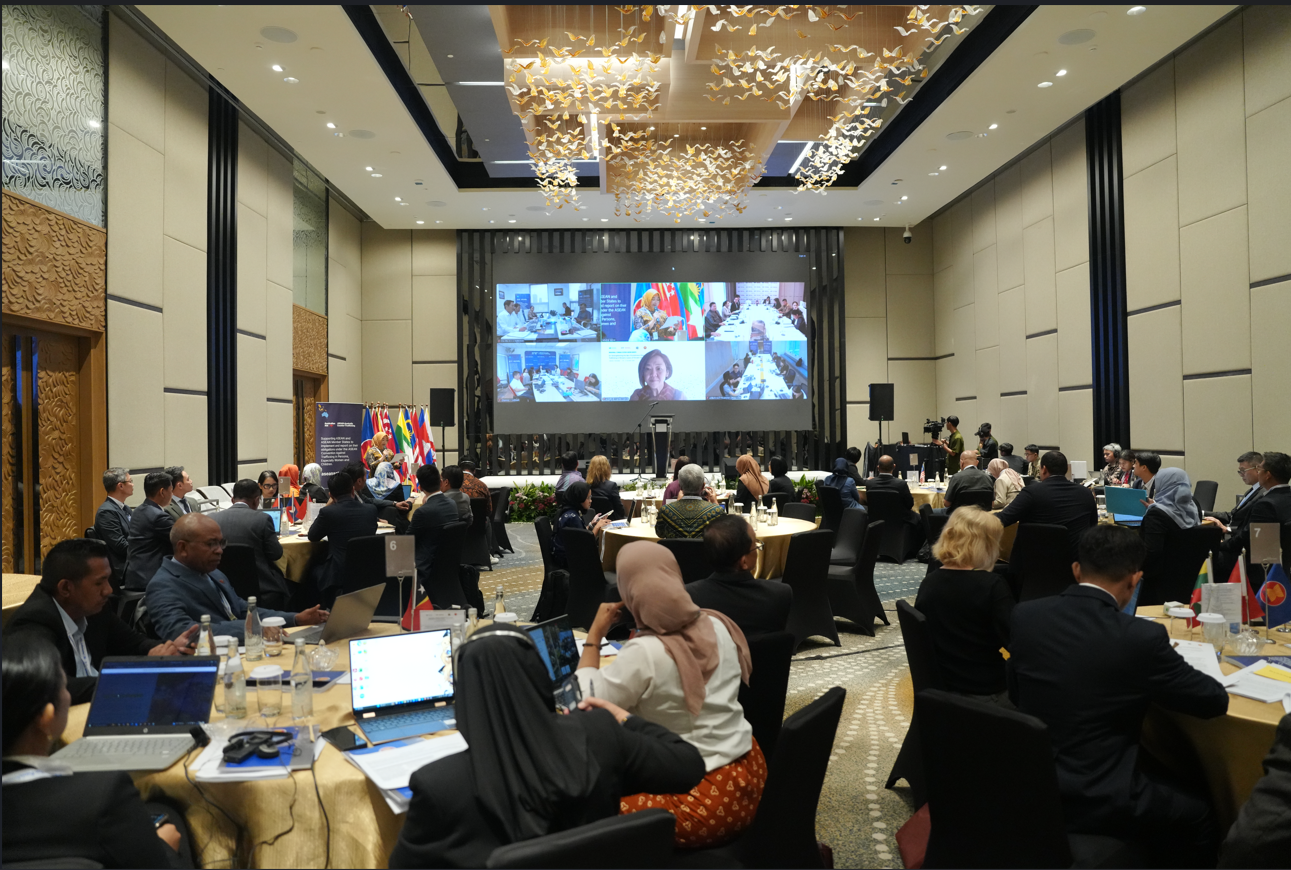
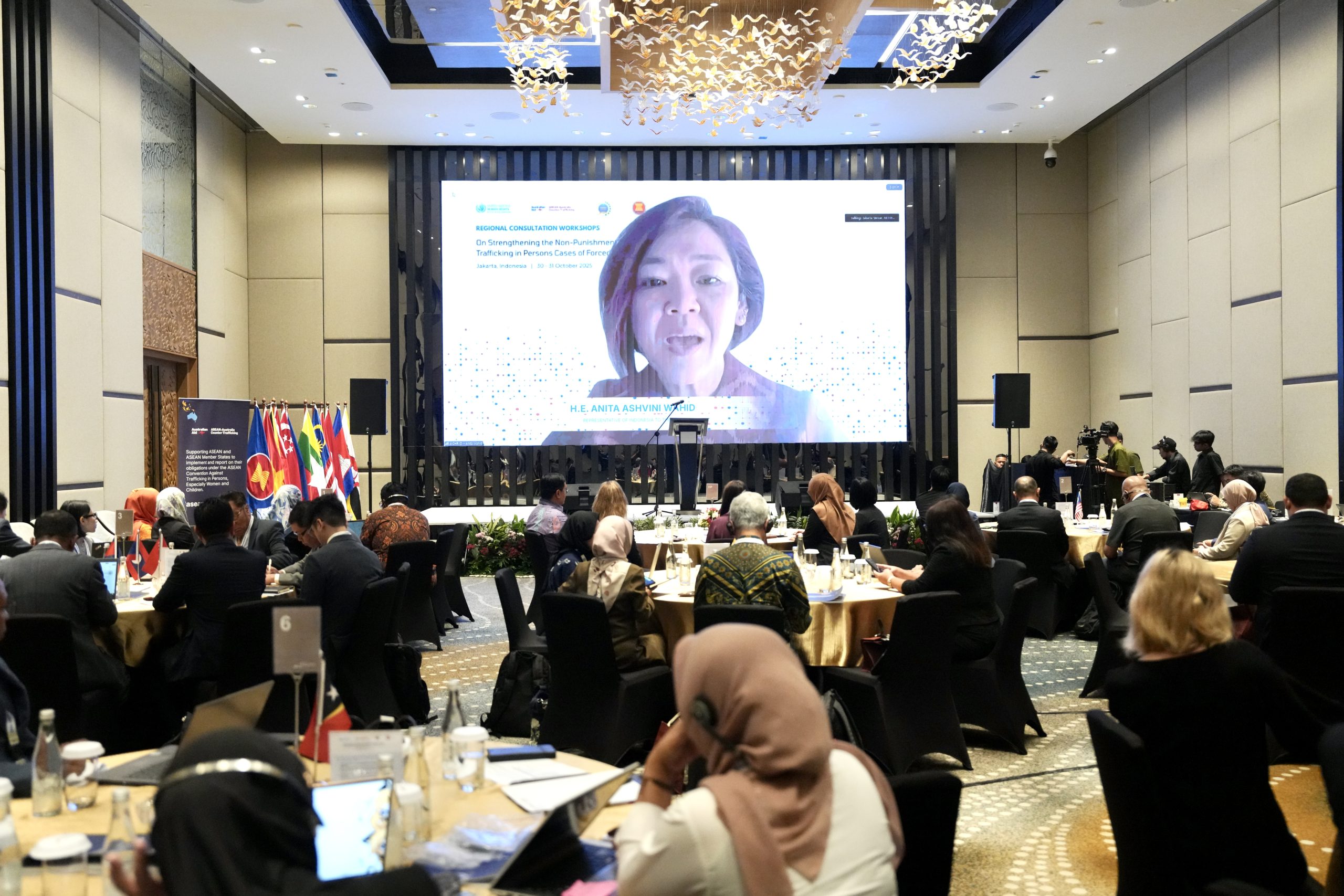
Building on the ASEAN Guideline on the Implementation of the Non-Punishment Principle for the Protection of Victims of Trafficking in Persons launched in June 2025, the workshop gathered over 80 participants, both in-person and online. Attendees included representatives from AICHR, SOMTC, and relevant ASEAN sectoral bodies, as well as experts from national law enforcement agencies, prosecutors, judges, social service providers, and civil society organisations.
In her opening remarks, Anita Ashvini Wahid, Representative of Indonesia to AICHR, underscored the importance of translating ASEAN’s normative commitments into practical action where the Non-Punishment Principle is not only about legal protection – “it is about reaffirming our shared commitment to human dignity”. She further emphasised that the consultation is a step toward ensuring that no victim is left behind, and that every ASEAN Member State is equipped with the tools and capacity to uphold the principle in practice.
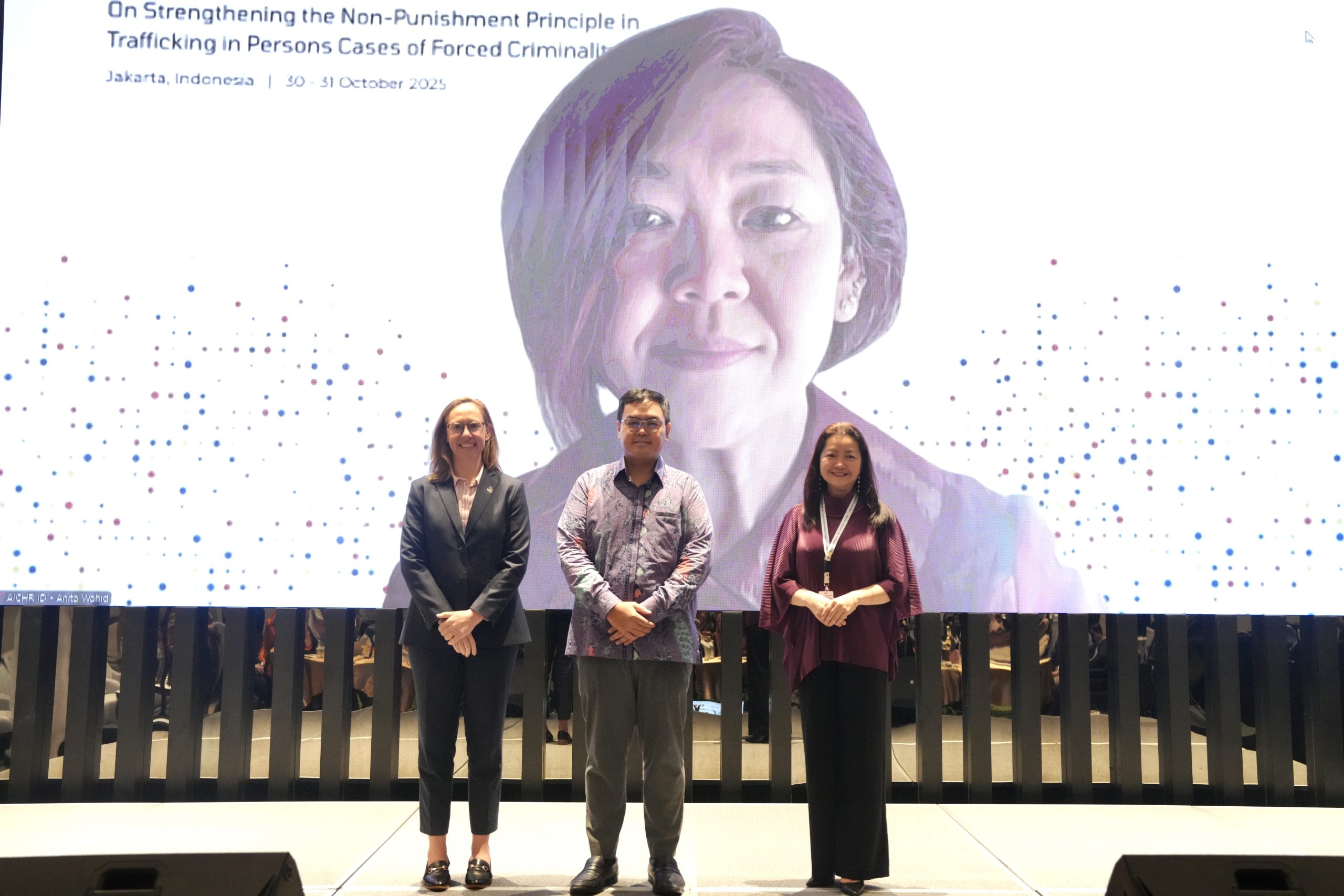
Meanwhile, Assistant Secretary Lilian De Leon of the Philippines, representing SOMTC, reaffirmed the shared responsibility to protect victims while prosecuting traffickers. She noted that the Non-Punishment Principle provides a vital safeguard, ensuring that “victims are not re-victimised by the very system meant to protect them.” She also expressed SOMTC’s commitment to working closely with AICHR and all ASEAN partners to translate the principle into real outcomes for victims across the region.
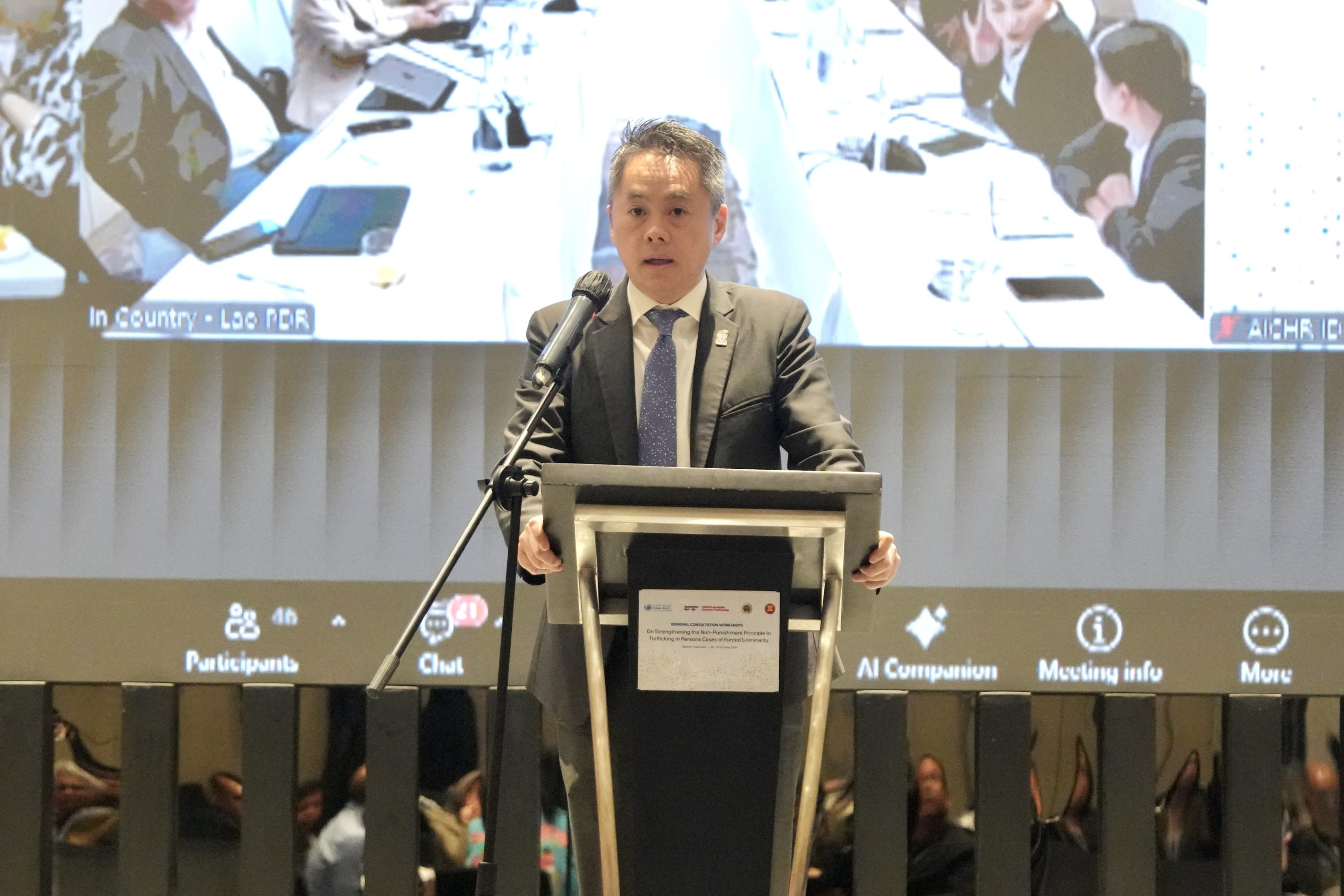
At the conclusion of the consultation workshop, Edmund Bon Tai Soon, Chair and Representative of Malaysia to the AICHR, commended the joint efforts of AICHR and SOMTC in advancing the Non-Punishment Principle (NPP) as a cornerstone of ASEAN’s human rights–based approach to combating trafficking in persons. He highlighted the issue of trafficking victims and survivors as a serious concern across the region and that the NPP embodies ASEAN’s human rights–based approach by ensuring that victims are protected, not penalised. He later expressed his appreciation to the recent developments at the ASEAN particularly the adoption of two landmark Declarations by AICHR—the Declaration on the Right to a Safe, Clean, Sustainable, and Healthy Environment and the Declaration on Promoting the Right to Development and Right to Peace—which recognise victims and survivors of trafficking as among the most vulnerable and marginalised groups.
The two-day consultation resulted in a shared understanding of the way forward for the project and participants agreed on several key milestones including; the development of ASEAN-specific training materials and case studies on the application of the NPP, creating the ASEAN indicators to identify trafficking cases involving forced criminality and establishing an inter-sectoral Drafting Working Group to prepare the Zero Draft of the ASEAN Indicators, with participation from AICHR, SOMTC, and other relevant ASEAN sectoral bodies.
Several participants expressed their interest to join the Drafting Working Group with the first online meeting scheduled for January 2026.